
Introduction
A modern Laboratory Information Management System has become essential for clinical laboratories seeking accuracy, speed, and compliance. As healthcare workflows evolve, LIMS play in healthcare continues to expand, offering automation that eliminates delays and errors. Pathology Lab Software, Laboratory Billing Software, and every component of a lab management information system now work together to streamline operations. With efficient data handling and structured processes, a LIMS laboratory information management system improves productivity and enables faster, more reliable report creation across all departments.
Report Creation in a Laboratory Information Management System
Report creation is the foundation of every diagnostic journey. This process is done in a Laboratory Information Management System, which makes it accurate, consistent, and has a quicker turnaround. As the adoption of LIMS play in healthcare continues to grow, structured templates, real-time data updates, and integrated tools are increasingly the tools used by laboratories to minimize the amount of manual work. Pathology Lab Software and Laboratory Billing Software directly support this function by synchronizing clinical data, enabling seamless doctor–lab communication, and reducing human errors. As part of a comprehensive lab management information system, report creation becomes faster, more reliable, and fully traceable.
Order Booking in a LIMS Laboratory Information Management System
Digital Workflow and Accuracy
A LIMS laboratory information management system digitizes the entire order entry process, removing handwritten errors and ensuring precise data collection. Patient details, test selections, and priorities are entered accurately, while Pathology Lab Software synchronizes requests instantly. This digital shift strengthens data consistency and improves operational flow. With Laboratory Billing Software integrated, each test is billed automatically, reducing financial errors and improving transparency.
Supporting Faster Report Creation
Proper order booking directly impacts the speed and accuracy of report creation. The Laboratory Information Management System automatically validates missing fields and flags incorrect entries. This ensures that every test is correctly mapped within Pathology Lab Software, allowing technicians and pathologists to work with clean, verified data. Consequently, the automation of laboratory information management systems and the role that LIMS have in the efficiency of healthcare are demonstrated, which in turn has made laboratories receive higher turnaround times and smoother workflows.
Sample Collection and Data Accuracy
Sample Collection is another crucial phase where the Laboratory Information Management System ensures traceability and precision. LIMS play in healthcare continues to grow as barcode-based sample labeling reduces mismatches. With a strong lab management information system, sample collection teams can quickly access patient details, required tests, and container types.
A LIMS laboratory information management system provides mobile interfaces that allow phlebotomists to update status from any location, which is extremely useful for home-collection labs. This also supports Pathology Lab Software by ensuring real-time data flow between departments.
Bullet Points – Sample Collection Advantages
- Barcode automation prevents sample mix-ups and improves accuracy.
- Integration with Laboratory Billing Software ensures collected tests are billed instantly.
- Real-time updates help accelerate report creation.
By integrating these features, laboratories experience the benefits of laboratory information management system automation at every step.
Pathology and Diagnostic Workflow
Pathology departments rely heavily on a comprehensive lab management information system to maintain accuracy and efficiency. A Laboratory Information Management System automates slide tracking, histopathology workflows, and microscopic result entry. Pathology Lab Software works closely with LIMS to support accurate report creation and enables pathologists to record findings digitally.
Identification and Tracking of Specimen
A LIMS laboratory information management system allocates special identifiers to each specimen making it fully traceable through the diagnostic path. Such an organized tracking saves confusion, mix-ups, and ensures integrity of the specimen.
Error Reduction and Structured Data Entry
LIMS play in healthcare by minimizing transcription errors through automated data entry. Standardized digital forms ensure that every detail is captured correctly. With Laboratory Billing Software integrated, test codes, charges, and service details are updated automatically in the final report.
Pathology Workflow and Report Creation
Faster report creation becomes possible because LIMS automates multiple crucial functions:
- Template-based reporting
- Standard terminology usage
- Auto-calculation of result ranges
- Integration with analyzers and diagnostic instruments
These features clearly showcase the benefits of laboratory information management system automation within pathology labs.
Accession and Tracking Precision
Accession is where samples officially enter the laboratory workflow. A Laboratory Information Management System ensures every sample is logged, barcoded, and tracked from this point forward. This process is essential for maintaining chain-of-custody and accountability, two major pillars of an efficient lab management information system.
LIMS play in healthcare significantly during accession as automated validation prevents mismatched test requests or incorrect patient data. Pathology Lab Software integrates seamlessly, ensuring each accessioned sample is linked to its respective test group.
Bullet Points – Accession Benefits
- Accurate mapping of samples to test requests
- Prevention of mix-ups with barcode tracking
- Integration with Laboratory Billing Software for cost validation
The quality and the speed of report creation depends on the accuracy of accession directly. With the Laboratory Information Management System, processes will be easier and efficient downstream because accessioning is error-free.
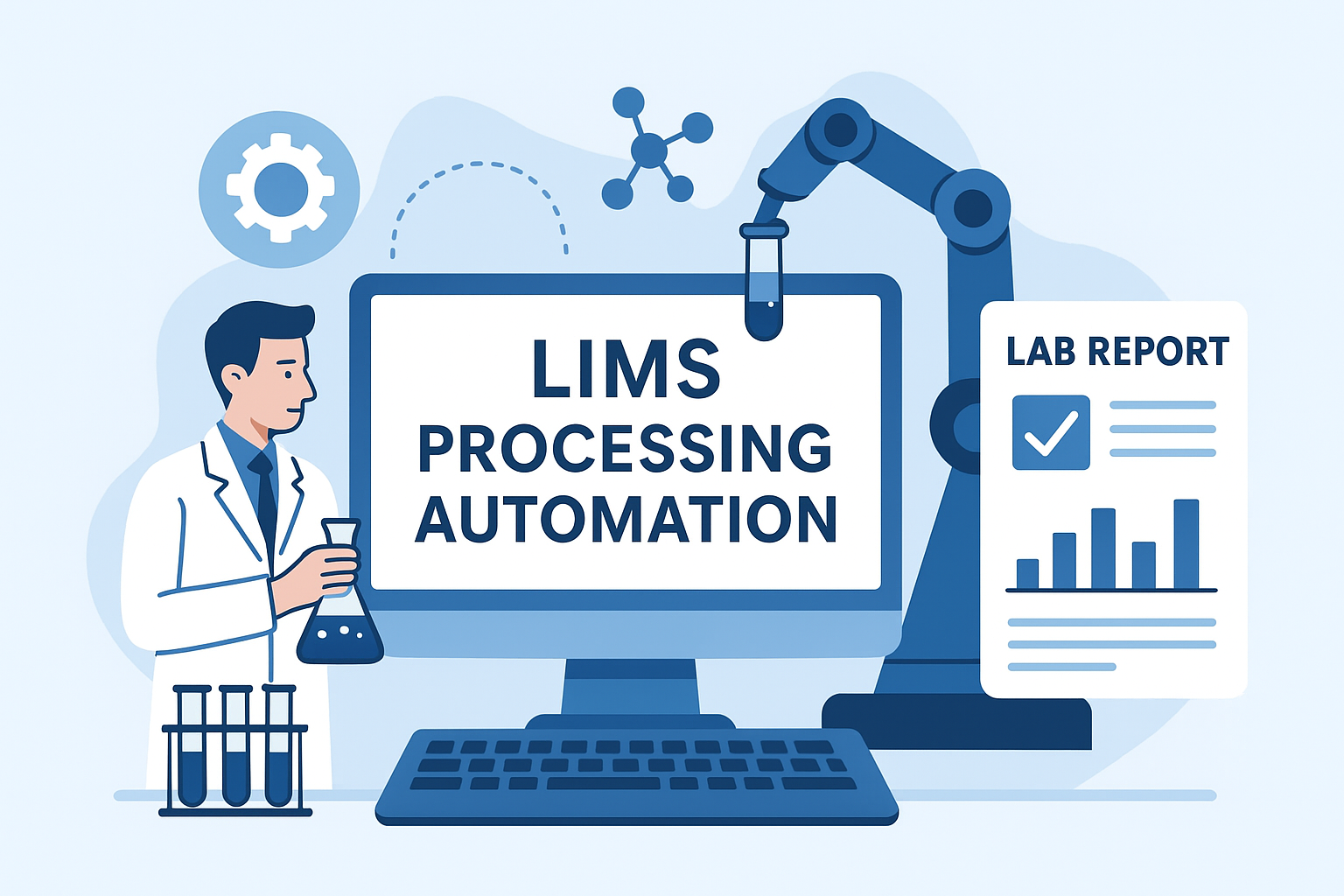
Processing Automation and Operational Efficiency
Processing is where LIMS automation shines the most. A Laboratory Information Management System automates the interaction between analyzers and the central database, ensuring that results are transmitted instantly. LIMS play in healthcare by enabling technicians to monitor machine status, reagent levels, and test completion in real time.
A robust lab management information system reduces manual data entry, freeing technicians from repetitive tasks. Pathology Lab Software integrates structured workflows, ensuring technicians follow standardized operating procedures. Laboratory Billing Software automatically updates costs based on processing complexity or additional tests.
How Processing Automation Accelerates Report Creation
Processing automation speeds up report creation by:
- Eliminating manual transcription errors
- Auto-validating analyzer results
- Allowing pathologists to review results instantly
- Providing structured templates for quick approval
These functions demonstrate the benefits of laboratory information management system automation in ensuring timely and accurate clinical reporting.
Conclusion
A Laboratory Information Management System transforms every stage of laboratory operations, from order booking to processing. With seamless integration of Pathology Lab Software, Laboratory Billing Software, and a powerful lab management information system, laboratories experience faster and more accurate report creation. With the further growth of the LIMS play in healthcare, automation is necessary to sustain efficiency, accuracy, and patient satisfaction. The LIMS laboratory information management system provides unparalleled reliability, which provides long-term reliability of operations and clinical benefits in the contemporary diagnostic setting.